A 'win-win'
Solar farm yields affordable, sustainable energy for MTE members while supporting local agriculture
Big things are happening on a small plot of land in Rutherford County, and MTE members are benefitting as a result.
A solar farm in Rutherford County’s Christiana community began harvesting the sun’s rays last June. The initiative provides an additional energy source to help MTE meet members’ growing demand for power. At the same time, it diversifies the co-op’s energy generation mix, giving members access to renewable electricity.
A third benefit provides even better news: This solar power is saving the co-op money on its wholesale power costs.
“This isn’t solar for the sake of solar — this renewable energy is having a positive impact on the affordability of the electricity we deliver to members,” said Brandon Wagoner, MTE’s vice president of strategy execution and analytics.
The co-op has exclusive access to the bargain-priced electricity the solar array yields — despite investing nothing to construct the project or footing the bill for its operation.
“There’s no downside here. This project is a win-win for co-op members,” Wagoner said.
Striking a good deal
The Christiana Solar Farm project began as part of a larger initiative involving the Tennessee Valley Authority (TVA), the primary generator of electricity distributed by MTE. When studies and industry analyses confirmed that new utility-scale renewable projects could deliver power at a lower cost than traditional sources, TVA began collaborating with MTE to incorporate solar projects into its energy mix.
The opportunity to deliver cost-effective energy that’s renewable doesn’t happen very often, Wagoner explained. “The cost of everything is going up and up. So, when you have a chance to do something that can bring costs down, you jump on it.”
This led MTE to sign a solar agreement with Silicon Ranch, a national leader in the installation and operation of utility-scale solar projects. On behalf of MTE, the Nashville-based company agreed to fund, construct, own, operate and maintain a solar farm within the co-op’s service area.
“Solar can be very expensive, so this partnership with Silicon Ranch was a great opportunity for us,” Wagoner said.
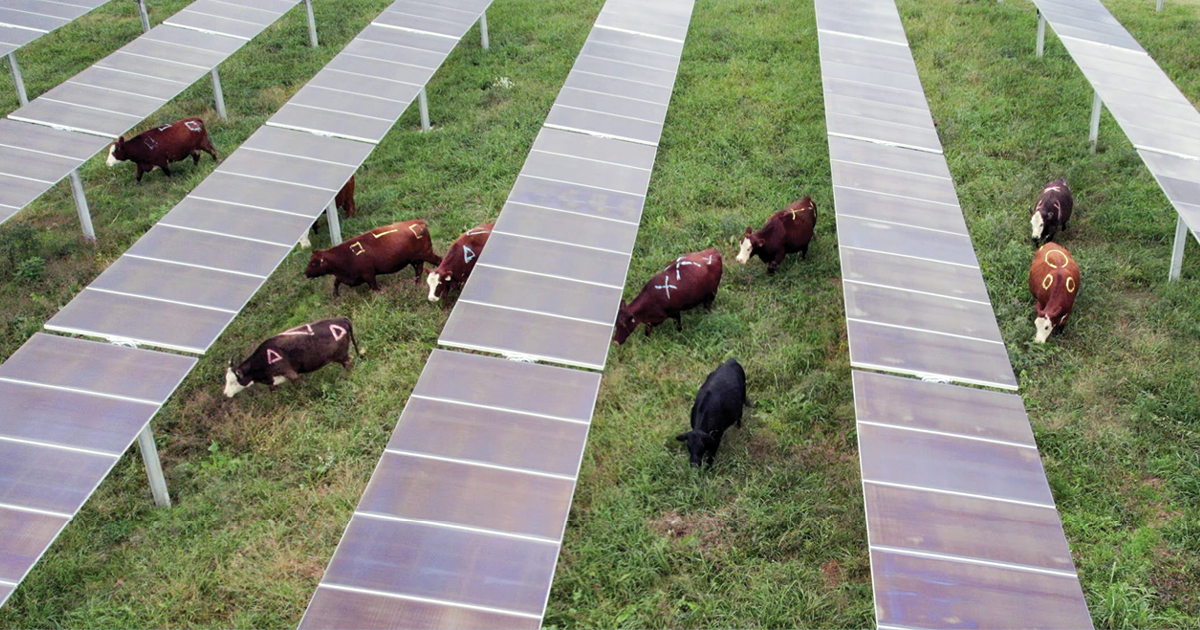
Those driving along Christiana Road, a state road that juts off Highway 231 a few miles south of the Murfreesboro city limit, can’t miss the resulting solar farm. Interconnected panels of photovoltaic cells stand like dedicated soldiers, reliably following and harvesting sunlight and converting it into electricity. Per an exclusive purchase agreement, that electricity feeds directly into MTE’s power grid.
“All we pay for is the electricity being generated, which we’d be buying anyway,” Wagoner said. “Because of the deal we’ve made, we’re able to buy it for slightly less than our typical TVA wholesale power costs, which are already some of the lowest in the country.”
The Christiana project’s best financial benefits are still to come, Wagoner believes.
“While it doesn’t immediately lower the co-op’s existing rates, incorporating a non-traditional power source into the energy mix can help us manage costs to keep rates stable,” he said.
Cost-efficient sustainability
Beyond the affordability factor, the solar facility addresses the concerns of members who want to be responsible with their energy use, Wagoner said.
“Some of our members are very conscious of the climate impact associated with energy,” he said. “The Christiana project allows us to be a good steward of member resources while also diversifying our energy generation portfolio to give these members the sustainability they want.”
The Rutherford County solar farm is projected to generate about 7,200 megawatt hours of power annually. That’s enough to replace the wholesale power used by about 500 member homes per year, Wagoner estimates.
Adding in agrivoltaics
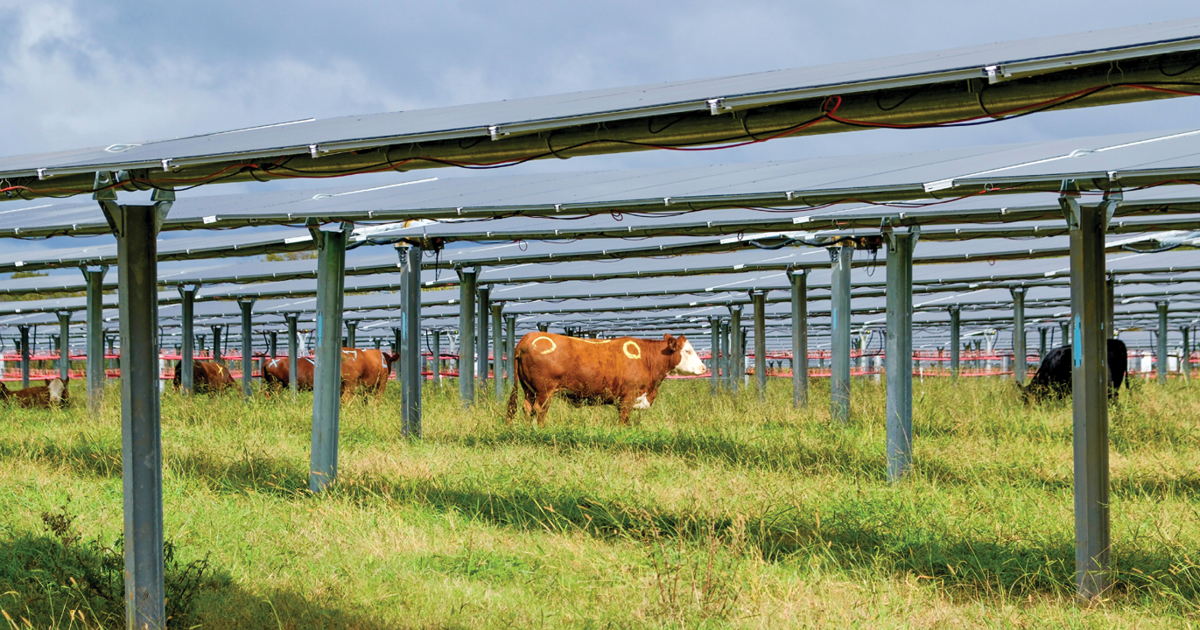
Up next for the facility? Agrivoltaics. It’s defined as the integration of solar energy production and agriculture. The Rutherford County property is ground zero for testing Silicon Ranch’s CattleTracker™ rotational grazing system. It is the first commercially viable rotational grazing technology that allows for co-locating cattle farming and utility-scale solar arrays.
“Christiana Solar Farm is a model for a farm-friendly energy future that honors tradition while driving innovation,” said Nick de Vries, Chief Technology Officer for Silicon Ranch and Principal Investigator for the CattleTrackerTM research program. As part of the continuing research effort, a herd of South Pole beef cattle will begin testing the system later this spring while feeding on pasture beneath and around the solar arrays, a practice known as solar grazing.
Silicon Ranch’s philosophy is that it’s solar and agriculture, not solar or agriculture. The company keeps project land in agricultural production through its Regenerative Energy® agribusiness, partnering with local farmers to graze sheep—and now cattle—under solar panels. Doing so supports soil health, protects wildlife, provides shade and element protection for the animals, and creates new opportunities for farmers, especially those who may not have access to land to grow their operations or even find entry into the agricultural economy.
CattleTracker™ is the culmination of research and development by a team of agrivoltaics experts, animal welfare scientists, regenerative ranchers and soil and ecosystem scientists from across the country and around the world. It builds and expands on Silicon Ranch’s nationally recognized work in sheep grazing, first introduced in 2018 to maintain agricultural production and provide natural “mowers” at solar sites here in the Southeast and across the country. The company now has about 12,000 sheep grazing at its solar sites that are either company-owned through its agribusiness or owned by its farming partners.
Cattle present bigger challenges for the researchers. Solar panels can be vulnerable to damage from the greater weight and height of grazing cows versus compact sheep that can easily walk underneath them. The living laboratory at the Christiana site will allow researchers to study cattle behavior, welfare and ecological impacts while also testing solar installation structures.
The Christiana Solar Farm is the latest tangible demonstration that energy generation and productive agriculture do not have to be competing priorities, but rather can be complementary pursuits
Checking the boxes
Summarizing the multiple benefits of the Christiana solar farm, Wagoner underscores that the renewable energy project addresses the co-op’s core objectives.
“It’s affordable, reliable, safe and helps MTE make good on our promise to provide outstanding member service,” he continued. “It checks all the boxes.”
MTE’s reliance on cost-effective renewable energy will continue to expand. The Christiana site is one of two projects the co-op is developing in partnership with Silicon Ranch. The second, a site in Cumberland County, will be the largest solar facility to serve a local power company directly in the Tennessee Valley. Construction is slated for completion in late 2027.
More Stories

Keep your cool
Power for pollinators