Construction Standards
Serving developers and contractors for 90+ years
As the trusted energy provider for thousands of members, MTE is committed to providing them affordable, safe, and reliable electricity. Our engineering team uses federal, state, and local guidelines in combination with industry best practices in our efforts to fulfill this mission. We've created standards and guidelines to help our builders, contractors, and other vendors navigate the rules and regulations around the construction of homes and businesses. These are updated regularly, so please check back frequently to ensure your project is meeting the current standards. If you have any questions, our engineering team is available to answer your questions and address any concerns.
Before you get started, review our development checklist
- Any development must meet any and all Operation Bulletins, Policy Bulletins, Rules and Regulations, and Bylaw requirements related to receiving new service published or established by MTE.
- Construction fees, including, without limitation, engineering fees, inspection fees, and line extension charges, must be paid before construction can be scheduled or commenced.
- All developers requesting electric power for any development (including, without limitation residential, commercial or industrial) must complete and sign MTE's standard rights-of-way easement form before any construction is scheduled or commenced. It is also the developer’s responsibility to acquire any rights-of-ways required to cross neighboring properties for offsite easements.
- MTE’s standard rights-of-way easement shall be twenty feet (20’) from the centerline (total of 40’) for any overhead transmission and/or distribution line or system, including anchoring, and ten feet (10’) from the centerline (total of 20’) for any underground transmission and/or distribution line or system.
- The developer shall provide and clear the initial 40-foot rights-of-way from "sky to ground" with the location to be defined by MTE Engineering (the "initial clearing"). MTE will maintain the rights-of-way after the initial clearing.
- The developer shall keep the MTE standard rights-of-way easement clear of all buildings, structures or other obstructions.
- MTE shall be a signatory on all plats and shall be evidenced as having access to all public utility, drainage and access easements ("PUDE") as shown on the plat. Should any city or county allow the PUDE to expire, MTE will retain the full PUDE as long as MTE utilities are in place.
- Complete and submit MTE Title Block – This is only for cases where cities do not include an MTE title block or if the PUDE does not meet MTE’s requirements related to location and/or width.
- Submit an electronic file of the development to MTE Engineering with applicable PUDE and lot lines. Electronic file shall be an AutoCad .dwg file in state-plane coordinates as well as a PDF of the entire development.
- For MTE to approve Construction Plans, the following information shall be completed.
- Show MTE provided electric and smart grid design on the site plan and utility plan.
- Show MTE rights-of-way easements for existing and proposed MTE electric facilities on the landscape plan, site plan, and utility plan.
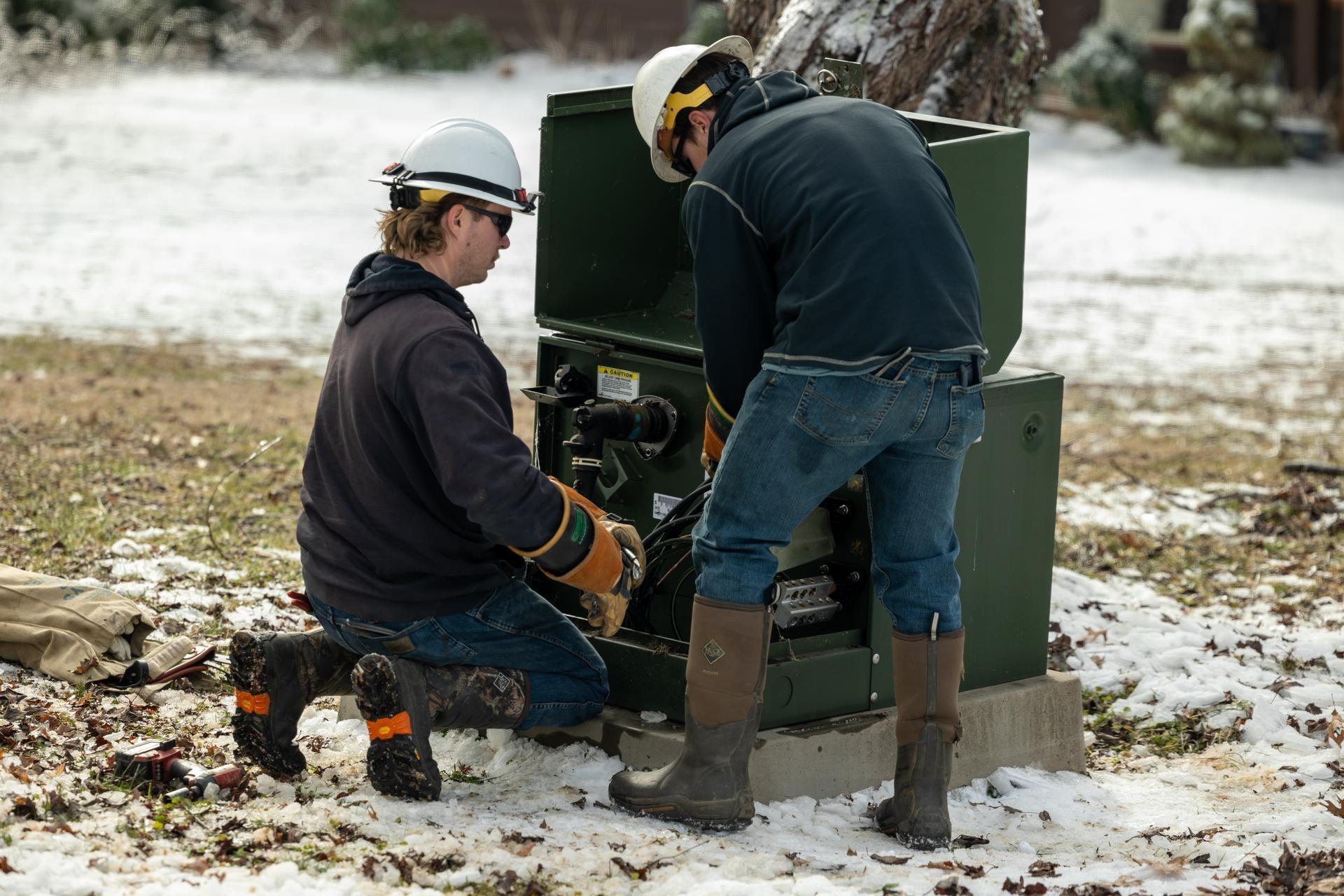
- MTE has the right to prohibit, prevent, and restrict the planting of any trees, shrubbery or vegetation within MTE overhead or underground rights-of-way easements. Only trees listed on the MTE Tree Planting Guidelines can be planted within any existing or proposed overhead power line rights-of-way. MTE will prohibit the planting of any trees, shrubbery or vegetation within 15’ of a pole or pad-mounted equipment.
- No proposed flag poles, site lighting poles, or streetlight poles shall be located within any existing or proposed MTE rights-of-way easements without written approval of MTE.
- Construction guidelines shall be obtained from MTE local office engineering personnel.
- MTE's underground inspection process involves coordinating multiple trips at various stages in the development process. It shall be the responsibility of the developer to contact MTE Engineering for more information.
- Temporary service requests and requirements should be discussed with MTE local office engineering personnel prior to installation.
- In many instances, additional agreements and contracts are required. It shall be the responsibility of the developer to contact MTE Engineering for more information and coordination of efforts.
Laptop & Desktop
We recommend using the latest Adobe PDF reader to view our documents.
Mobile Devices
Download the MTE Document Library on your mobile devices for up-to-date standards and guidelines.







Need to speak to someone?
Our Contact Center can quickly direct your call to the right engineering team member to handle your question, concern, or situation. Give them a call at 877-777-9020.
You can also send our engineering team a message using the contact form.
Ditch Inspection Requests
Our engineering team can help you schedule a ditch inspection which is conducted during our regular business office hours. If you have any questions, please let us know.
To schedule a ditch inspection request, please use the form below.