EV Ready
Charging at home is the easy part
Most EV owners charge at home overnight and use public charging when it's convenient or on longer trips. Level 2 charging requires a 240-volt circuit, and that electrical work often costs more than the charger itself.
That's what EV Ready helps with. MTE gives residential members a $50 bill credit toward installing the wiring that supports Level 2 charging at home, whether that's a 240-volt outlet or a direct-wired charger. Any brand of Level 2 charger qualifies — the credit follows the wiring, not the equipment.
Builders and home developers can also participate by including wiring during construction.

Learn how the EV Ready incentive works
The credit covers the 240-volt wiring and plug that make Level 2 charging possible — not the charger itself.
Here's what qualifies:
-
A 240-volt service for any brand of Level 2 charger, not just Tesla or ChargePoint.
-
A 240-volt outlet, if your vehicle came with a plug that connects directly to the wall — no wall-mounted charger required.
-
A hardwired charger, though additional details and review may be needed based on your situation.
MTE recommends a 50-amp service, and the incentive specifies a 50-amp outlet, so you have enough capacity for whatever you drive next.
Related resources:
Complete a short online application and attach a receipt for the completed work. Once your application is submitted successfully, the $50 credit appears on your next bill.
The application asks for:
-
Your account number and installation address.
-
The type of plug installed, such as a NEMA 14-50.
-
Your electrical contractor's name.
-
Your EV make and model, and your Level 2 charger brand.
You'll also agree to let an MTE representative verify the installation. And we'll ask you to set your default charging schedule to run primarily overnight when that's convenient for you — overnight charging is easier on the grid and often easier on your bill.
Related resources:
Adding a 240-volt circuit during construction costs far less than retrofitting one after the home is finished — and it saves your buyer hundreds of dollars down the road. An EV-ready garage is a selling point now and a practical head start later.
Builders and home developers can participate by completing a short online application. You'll be eligible once the application is submitted and reviewed. Contact our EV team at DriveEV@mte.com to learn more about the builder program.
Related resources:
What to know about charging at home
Working with a 50-amp, 240-volt service is dangerous and should be done by a licensed professional following local building and electrical codes. MTE assumes no liability for the installation, and any warranties come from your contractor or the equipment manufacturer.
Not sure whether your panel can handle a 240-volt circuit, or which plug type to specify? Our EV team can talk through service size, plug type, and next steps before you hire anyone. Email DriveEV@mte.com.
Level 3 chargers need roughly 50 kW of capacity and a 480-volt service. That's not compatible with residential electrical systems and costs significantly more to install. If you're interested in a Level 3 charger for a business or public charging station, contact DriveEV@mte.com.
If you're already charging while you sleep, the NiteFlex Plan may be worth a look — it offers lower overnight rates for households that can shift use to off-peak hours.
Related resources:
Residential members
Install the wiring, apply online with your receipt,
and watch for the $50 credit on your next bill.
Builders and developers
Include 240-volt wiring in new construction and
give buyers a garage that's ready to charge.
Contact MTE's EV experts
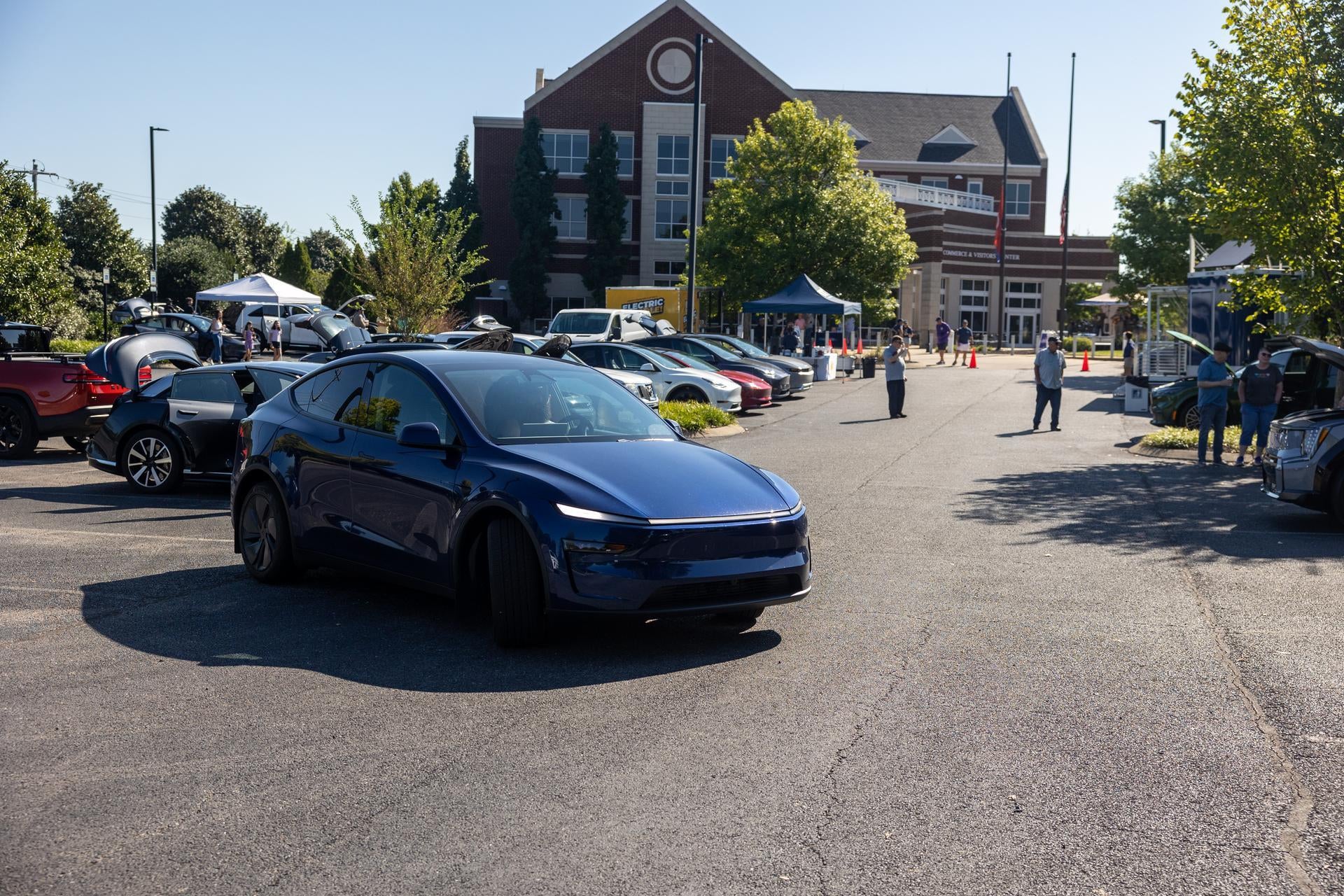
Have questions about electric vehicles or MTE’s electric vehicle resources and programs? MTE’s EV experts can help members find information and next steps for driving electric.
Email: DriveEV@mte.com
Phone: 877-777-9020
Online: mte.com/DriveEV