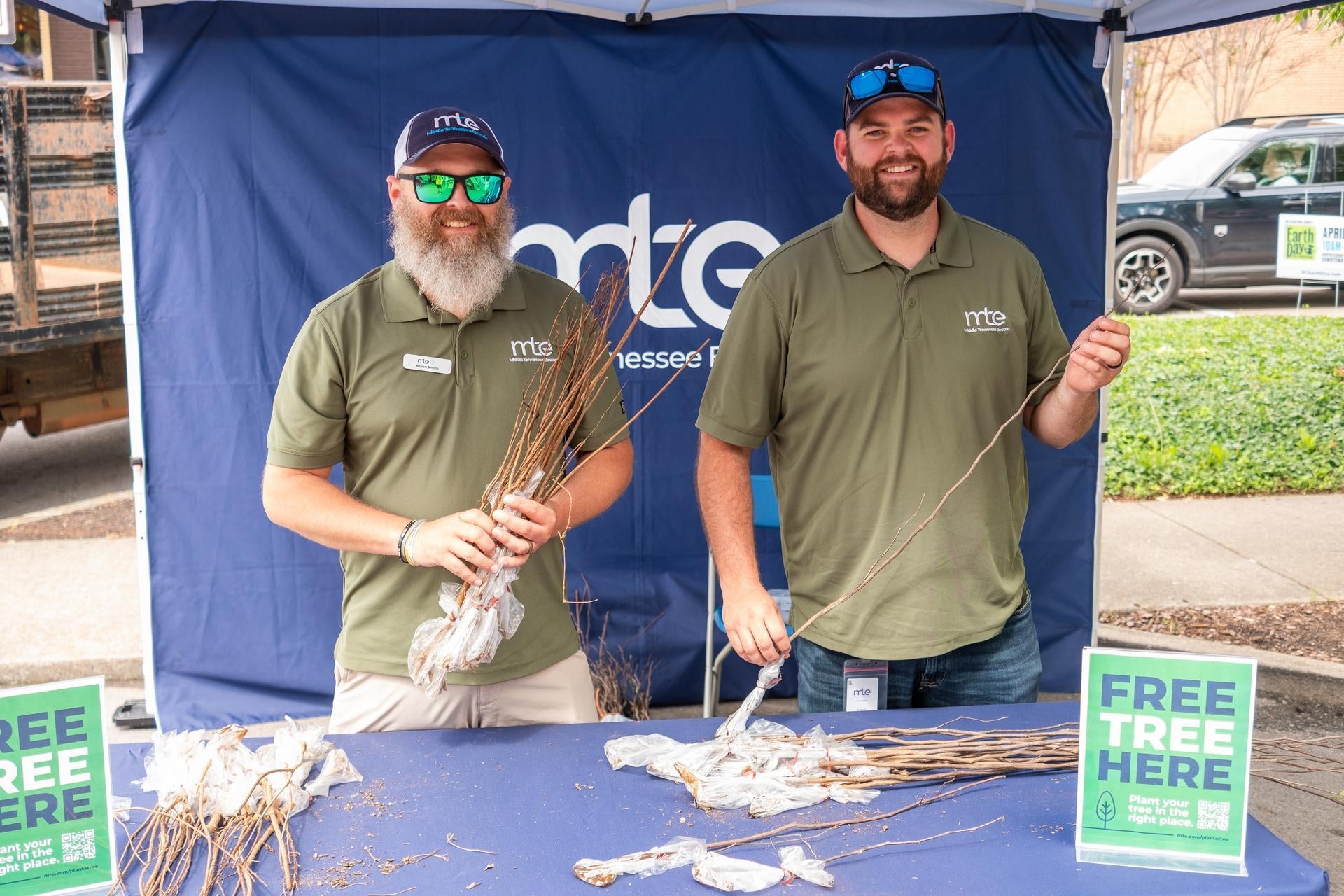
Tree and vegetation management frequently asked questions
Get answers about tree pruning, right-of-way maintenance, and vegetation management
MTE’s Vegetation Management Team works with members, the environment, and the needs of the electric system to support safe, reliable service. This page answers common questions about planting trees near power lines, right-of-way maintenance, tree pruning, tree replacement, tree growth regulators, and herbicide use.
Pruning and right-of-way maintenance
Why does MTE prune trees along its right-of-way?
Trees growing into or near power lines can cause power interruptions and safety concerns for members and their neighbors.
MTE uses a regular pruning cycle to help keep power lines free of tree growth across our service territory. Maintaining the entire power line on a regular cycle, rather than addressing only individual locations, supports a more economical and reliable approach to maintaining the power system.
This planned approach helps improve the safety and reliability of our electric service.
Can members or hired contractors prune their own trees around power lines and equipment instead of MTE contractors?
No. MTE contractors are certified to safely remove vegetation by first obtaining the proper clearance required by OSHA in ANSI Z133.1 to prune around lines and equipment within the 20’ right-of-way clearance.
Members may safely prune trees outside the 20’ right-of-way clearance, provided the debris will not come into contact with any electrical equipment.
Does MTE prune around service lines and unenergized structures?
Yes. MTE prunes a five-foot radius around the service lines running from the primary lines to your home during our regular pruning cycle only. MTE does not prune around service lines at any other time.
MTE may also remove vegetation around unenergized structures, such as poles and support guys, if it creates a safety or reliability risk.
View the service clearance diagram.
How does MTE prune or remove trees?
As a Treeline USA accredited utility, MTE uses accepted pruning practices developed by the International Society of Arboriculture (ISA) and approved by the National Arborist Association and the National Arbor Day Foundation to maintain safe clearance from power lines while protecting tree health whenever possible.
Our crews use methods such as lateral pruning, side pruning, and crown reduction to guide tree growth away from power lines. Lateral pruning keeps the tree’s structure stronger, improves resistance to high winds and heavy ice, and reduces future growth toward power lines.
MTE does not use the topping method, also called rounding over or shaping. The International Society of Arboriculture does not endorse this method because it can make trees more vulnerable to disease and insect damage.
MTE removes trees only when they pose a threat to electric service. When fast-growing trees are directly under power lines, MTE may recommend removal because repeated pruning can be costly, temporary, or harmful to the tree.
Does MTE remove chips after grinding stumps along the right-of-way?
No. Chips are left on site to biodegrade and settle, which provides rich soil for grass and plants to grow. MTE does not place dirt, seed, straw, or similar materials on the site.
Storm response and member notification
Does MTE clean up trees after a storm?
No. MTE proactively prunes trees with the goal of preventing electric outages on the system during weather events. After a storm, the immediate priority is restoring power to members.
The member owns and is responsible for the tree.
How will members know when MTE will be pruning trees?
Work planners go into neighborhoods to meet with members and discuss upcoming work. These work planners are specially trained, and many are certified arborists.
If a work planner is unable to contact a homeowner, a door hanger is left explaining the pruning that must be performed. The door hanger includes a phone number for members with questions or concerns.
Planting and tree replacement
What trees can I plant near power lines?
You should plant the right tree in the right place. Some trees should not be planted near power line rights-of-way or underground electric equipment. As trees grow, their mature height or width can interfere with the power grid.
MTE provides a list of recommended trees to help members choose trees that are better suited for planting near power lines based on their mature size.
View the recommended tree list.
Does MTE replace trees removed from the right-of-way?
Yes, in some cases. If the tree is landscaped and mowed around weekly, MTE will replace it with a five-foot-tall, low-growing species planted at an approved distance from the power line at no cost to the member.
When a residential tree must be removed, members may choose a replacement tree from MTE’s approved replacement tree list. Because planting is not recommended during the growing season, MTE plants replacement trees from November through mid-April.
Learn more about our tree replacement options.
Tree growth regulators
What are tree growth regulators, and does MTE use them?
Tree growth regulators (TGRs) are clay-based growth inhibitors applied underground near tree roots.
TGRs allow a tree to grow more slowly while improving foliage density, color, and health. This can reduce how frequently MTE’s Vegetation Management team needs to trim a tree.
MTE uses TGRs along with pruning cycles to maintain the power line right-of-way on or around member property. TGRs are effective for three to five years, depending on the tree.
Does MTE require tree growth regulators on member property?
No. Members are not required to use tree growth regulators on their property.
MTE offers alternatives for right-of-way maintenance on member property. If a member does not want tree growth regulators used on their property, they should contact MTE’s Vegetation Management team.
Are tree growth regulators harmful to people, pets, plants, or surrounding vegetation?
No. Tree growth regulators are clay-based growth inhibitors designed to slow tree growth.
The EPA and state agencies have approved the use of tree growth regulators because there have been no reported cases of adverse effects on people, pets, or wildlife.
Tree growth regulators can slow down the growth of surrounding vegetation if roots come in contact with the application site. Because the application is clay-based, it affects only the roots in the area where it is applied.
Herbicide questions
What is MTE’s approach to using herbicides?
MTE’s approach to using herbicides focuses on woody-stemmed vegetation growing within the right-of-way. We apply the herbicide using low-volume, backpack-mounted equipment to directly target vegetation that could create outages if left alone.
MTE contracts with professional, licensed, and certified applicators to treat woody-stemmed vegetation, such as saplings, within the right-of-way. By targeting woody-stemmed vegetation, grasses and flowers can grow more freely, and access to power lines is easier to maintain.
Should members be concerned about herbicide use or environmental impact?
No. MTE contractors apply a non-glyphosate product to treat woody-stemmed vegetation. Glyphosate is the active ingredient in Roundup.
All products used are registered and approved by the EPA and state agencies. Products are applied using low-volume, backpack-mounted equipment to support precise application.
There are no adverse effects to animals or livestock when the product is used according to label directions. Applications are performed using best management practices from the Tennessee Department of Agriculture, and aquatic-approved application practices are used near bodies of water.
As herbaceous plants are given more space to thrive in the right-of-way, the food supply can increase for insects, birds, bees, butterflies, and other animals.
Helpful Links:
Contact MTE’s Vegetation Management Team
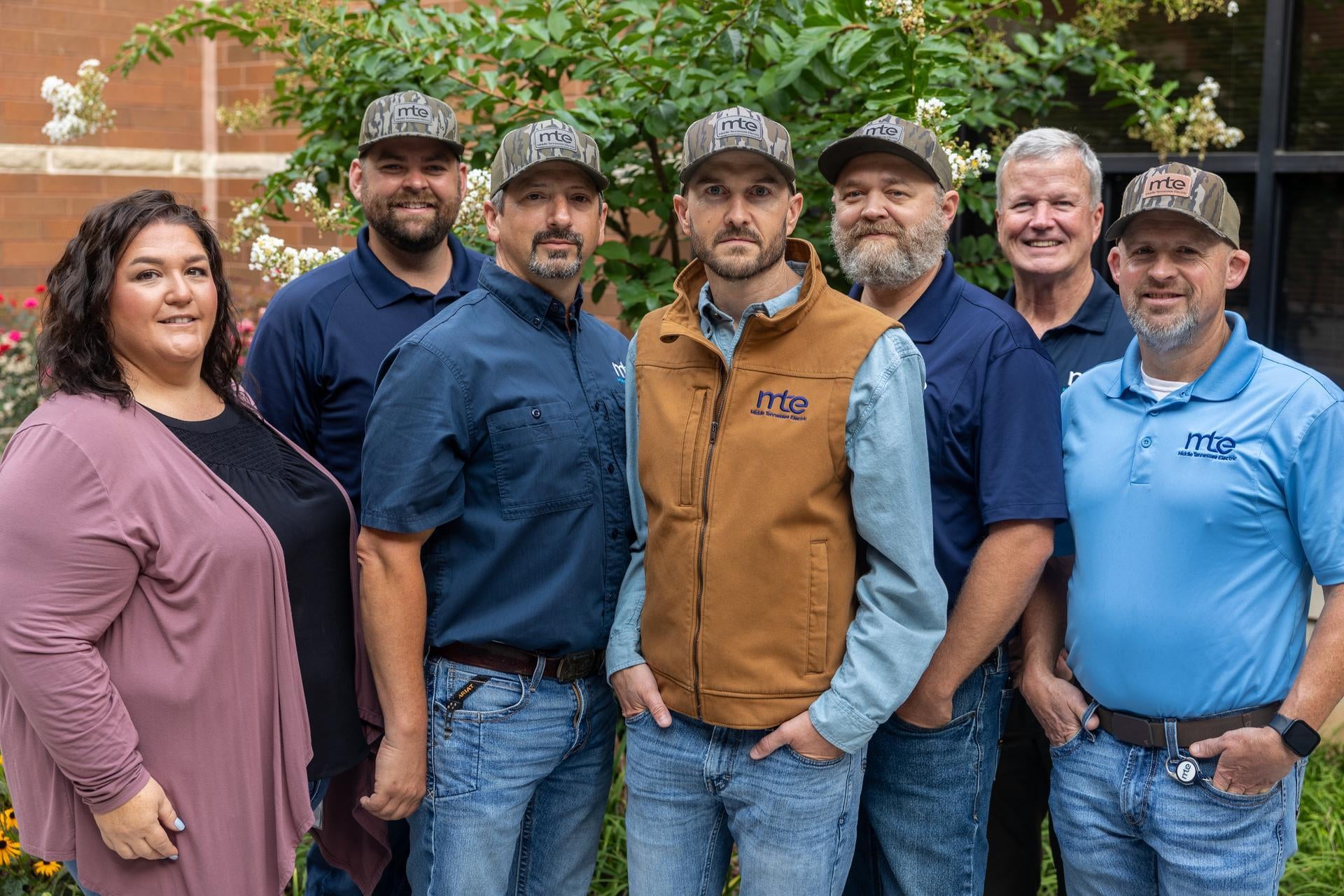
MTE’s Vegetation Management team helps keep power reliable by managing trees and plants near our electric system. As a Treeline USA-accredited electric utility, our trained arborists work to reduce tree-related outages while supporting healthier environments along our rights-of-way.
They're here to serve MTE members with information and explanations about our vegetation management program.
Email: VegetationsMgmt@mte.com
Phone: 877-414-7685
Online: mte.com/VegetationManagement